
Khagrachhari
Khagrachhari is a district in Bangladesh, part of the Chittagong division. It's not too big, covering about 2699.55 square kilometers. On the map, it's surrounded by the Indian state of Tripura to the north, Rangamati and Chittagong districts to the south, Rangamati district to the east, and Chittagong district and the Indian state of Tripura to the west. The weather here can get quite hot, with temperatures ranging from around 13°C to 34.6°C. It also gets quite rainy, with an average rainfall of 3031 mm.
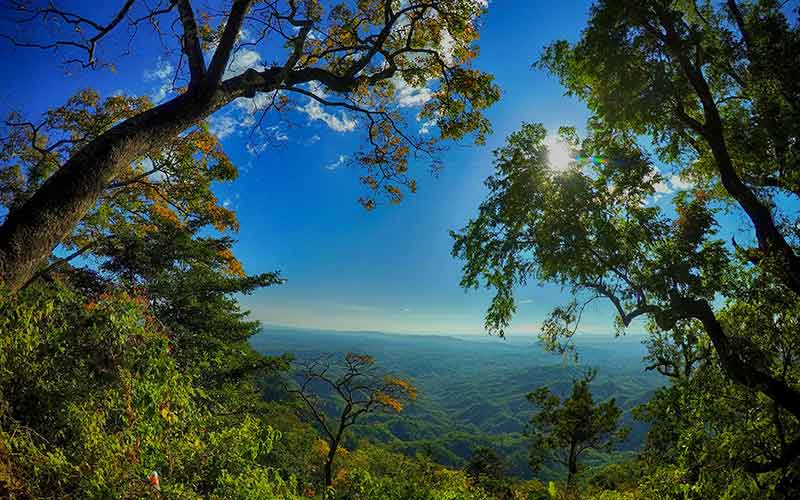
The land here is hilly, made up of folded sedimentary rocks. There are some notable hill ranges like Alu Tila, Bhanga Mura, Matai Pukhiri, and Matai Lakho. The main rivers are Chingri, Maini, Feni, and Halda, and there's a lake called Mataipukhiri.
Khagrachhari town, the main area, was set up back in 1860 by Remrochai Chowdhury. It's not very big, covering about 67.99 square kilometers. In the town, there are about 39654 people living in 9 wards and 61 neighborhoods. Most of the people here can read and write at least a little.
Now, let's talk about the administration. Khagrachhari became its own district in 1983. Before that, it was part of the Chittagong Hill Tracts, which was set up in 1860 under a law called the 'Frontier Tribes Act 22 of 1860'. The area was divided into three parts, including Khagrachhari, in 1900. The Khagrachhari Local Government Legislative Council was created in 1989, and it later became the Khagrachhari Hill District Council in 1997. This district has 8 upazilas, 34 union parishads, 123 mouzas, 953 villages, one municipality, and 9 wards with 61 neighborhoods.
When it comes to history, Khagrachhari has seen a lot. It used to be under different rulers like the Tripura State, the Arakans, and the Sultans until the British East India Company took control in 1760. Things changed a lot over the years, especially during the Pakistan period. But in 1997, there was an agreement called the Chittagong Hill Tracts Peace Accord that helped solve some problems.
The people here have different backgrounds and beliefs. Most of them are Muslim, but there's also a big Buddhist community along with Hindus, Christians, and others. There are some well-known educational institutions like Khagrachhari Government College and Ramgarh Government Degree College. They have different local newspapers and there are cultural organizations and public facilities like libraries and cinemas.
A lot of people work in agriculture here, growing things like rice, corn, ginger, and turmeric. There's also some rubber processing and other industries. The transportation system includes roads, waterways, and traditional methods like elephants and horse carriages, though they're not used much nowadays.
Every year, there are fairs and festivals that bring people together, like the Jur Maram Shiva Mela and the Hindu Thrash Mela. The district also exports various products like rubber, cotton fabrics, and agricultural goods.
Many NGOs work in Khagrachhari, providing different kinds of support and services to the community. There are also health centers and hospitals to take care of people's medical needs.
