
Jhalokathi
When you first hear the name Jhalokathi, you might imagine a quiet little place by the river — and that’s exactly what it is. This small district in southern Bangladesh is surrounded by endless green fields, calm rivers, and old memories. The Sugandha, Bishkhali, and Dhansiri rivers flow through it like silver ribbons, giving life to the people and the land. Even though Jhalokathi is not a big district, it holds a charm that feels both peaceful and poetic.
If you’ve ever read Jibanananda Das’s poem “Abar Aasibo Phire” (I Shall Return Again), you already know about the Dhansiri River. That famous river — the symbol of longing and return — actually flows right here in Jhalokathi. It’s a place where nature and literature meet, where every bend of the river feels like a line from his poetry.
How Jhalokathi Got Its Name
The story behind the name Jhalokathi is quite interesting and has several versions. Many believe it came from the local fishing community. Long ago, fishermen — especially from the Kaivarta or jolya (fisherfolk) group — settled along the riverbanks of this area. They were known as “Jhalo” people, and their neighborhoods were called “Jhalopara.”
According to local stories, these fishermen used to sell fishing sticks called “Jaler Kathi.” Over time, the words “Jalo” and “Kathi” merged, and people began calling the place Jhalokathi. Poet Bijoy Gupta even mentioned the “Jhalo” fishermen in his famous Manasamangal Kavya.
Some historians believe the name also came from the idea of “clearing forests” (since kathi can mean cutting or clearing). The fishermen once cleared dense jungles by the river to make their homes. So, in a way, Jhalokathi could mean “the place where the Jhalo people cleared the woods.”
Whatever the exact reason, the name carries the memory of those early fishing families who first made this land their home. Later, the place grew into a busy market town, and eventually, on February 1, 1984, Jhalokathi was officially recognized as a district.
A Glimpse into the Past
Before becoming a district, Jhalokathi was known as Maharajganj. During British times, people even called it the “Calcutta of South Bengal” because of its trade and communication network. Boats would come and go across the rivers carrying goods, crafts, and stories from one village to another.
The area was also home to landlords, poets, and spiritual leaders who shaped its culture. You can still see old estates, temples, and mosques here that remind you of how rich and lively this small town once was.
Area and Geography
Jhalokathi might be small, but it’s full of life. It covers about 706.76 square kilometers, making it the third smallest district in Bangladesh. To put that in perspective, if it were a separate country, it would be around 175th in the world by size — smaller than 19 other independent nations!
The landscape is mostly flat and covered with rivers, canals, and fertile fields. Because of that, farming and fishing are a big part of life here. You’ll see fruit trees everywhere — mango, jackfruit, guava, and coconut — adding color to the countryside.
People and Lifestyle
About 682,000 people live in Jhalokathi, making it one of the least populated districts in Bangladesh. But the community here is close-knit, and people still know their neighbors well. The male-to-female ratio is almost equal — 1:1.01, which shows a good social balance.
Most people depend on agriculture, small businesses, or traditional crafts. The markets are always busy with sellers offering fruits, mats, clay pots, and betel leaves — things that have been part of life here for generations.
The Rivers that Define Jhalokathi
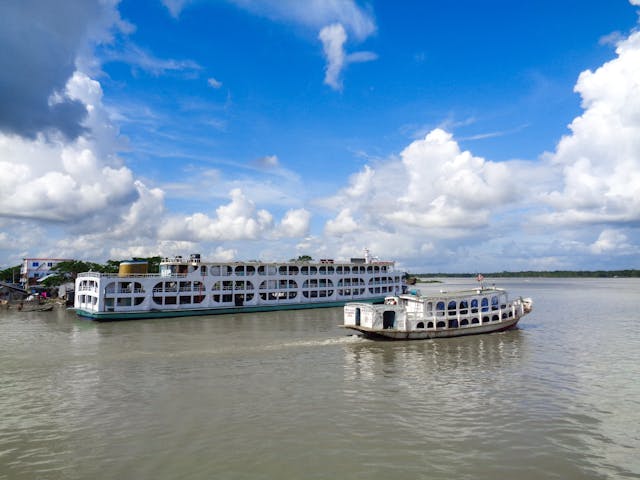
Rivers are everywhere in this district. The Dhansiri, Sugandha, and Bishkhali are not just sources of water — they’re the lifeline of the people. Boats still carry goods across them, and fishermen still go out early in the morning, just like their ancestors did.
Standing on the banks of the Dhansiri River, it’s easy to understand why Jibanananda Das wrote about it with so much emotion. The soft breeze, the quiet water, and the golden reflection of the sunset make you feel like time has stopped for a while.
Administrative Structure
Jhalokathi has 4 upazilas (sub-districts), 2 municipalities, and 32 unions. Despite being small, the local administration is quite organized, and most government offices are within easy reach. The towns are not too crowded, and life moves at a calm pace — slower, but somehow more peaceful.
Places to Visit in Jhalokathi
Even though it’s not a typical tourist destination, Jhalokathi has many places worth exploring, especially if you enjoy history and quiet natural spots. Some of the well-known places include:
-
Rajapur Saturia Zamindar House – A grand mansion that still carries the charm of Bengal’s zamindar era.
-
Jibanananda Das’s Maternal Home – A must-visit for poetry lovers who want to feel closer to his memories.
-
Kirttipasha and Siddhakathi Zamindar Houses – Examples of old aristocratic architecture in rural Bengal.
-
Shibbari Temple and Thakurbari – Sacred places that show the district’s deep religious roots.
-
Sher-e-Bangla A.K. Fazlul Huq’s Maternal Home – The ancestral house of one of Bengal’s greatest political leaders.
-
Mia Bari Mosque and Galuya Brick Mosque – Beautiful examples of Islamic design and Mughal influence.
-
Gabkhan Bridge – A modern bridge offering a stunning view of the river and surrounding greenery.
-
Nesarabad Complex, Shrine of Alhaj Mohammad Lehaj Chan Chishti (R.A.), and Shrine of Hazrat Dawood Shah – Places of peace and spirituality.
-
Ponabalia Temple, Beshnai Mallik’s Pond, and City Park – Popular local hangout spots, especially on holidays.
Each site tells its own story — some about faith, some about history, and some simply about the beauty of living close to nature.
Traditional Crafts and Local Industries
Jhalokathi isn’t only known for its rivers and history; it’s also famous for its traditional crafts. People here are skilled in Shital Pati (cool mat) weaving, pottery, handloom weaving, and betel leaf cultivation (Paan Boroj).
If you walk through one of the local markets, you’ll see colorful mats, clay pots, and handwoven fabrics — things made by hand, not machines. These crafts are not just products; they are part of the people’s identity.
Famous People from Jhalokathi
Some remarkable people were born in this district. One of them is Poet Kamini Roy (1864–1933) from Basanda village. She was the first woman graduate in British India, a strong voice for women’s education and rights during her time.
Another respected figure is Hazrat Maulana Mohammad Azizur Rahman (1911–2008) from Nesarabad. He was a spiritual leader who guided people with kindness and knowledge. Both of them represent the intellectual and spiritual spirit of Jhalokathi.
Local Fruits and Food
Because of its fertile soil, Jhalokathi produces plenty of fruits like mango, banana, guava, coconut, jackfruit, litchi, olive (amra), and palm fruit. These fruits are a big part of the local diet. During harvest seasons, markets overflow with fresh produce, and the air smells sweet.
The food here is simple but delicious — mostly rice, fish, and seasonal vegetables. The people of Jhalokathi believe in eating fresh and sharing food with others, which makes their hospitality even warmer.
Final Thoughts
Jhalokathi might not appear grand on a map, but it’s one of those places that quietly grows on you. It’s full of rivers, green fields, and friendly people who live close to nature. Every corner of this district — from the old zamindar houses to the calm flow of the Dhansiri River — carries a piece of Bengal’s soul.
If you ever get a chance to visit, take a slow boat ride, taste the local fruits, and talk to the people. You’ll realize that Jhalokathi isn’t just a district — it’s a feeling, a small world where history, poetry, and life meet beautifully.
