
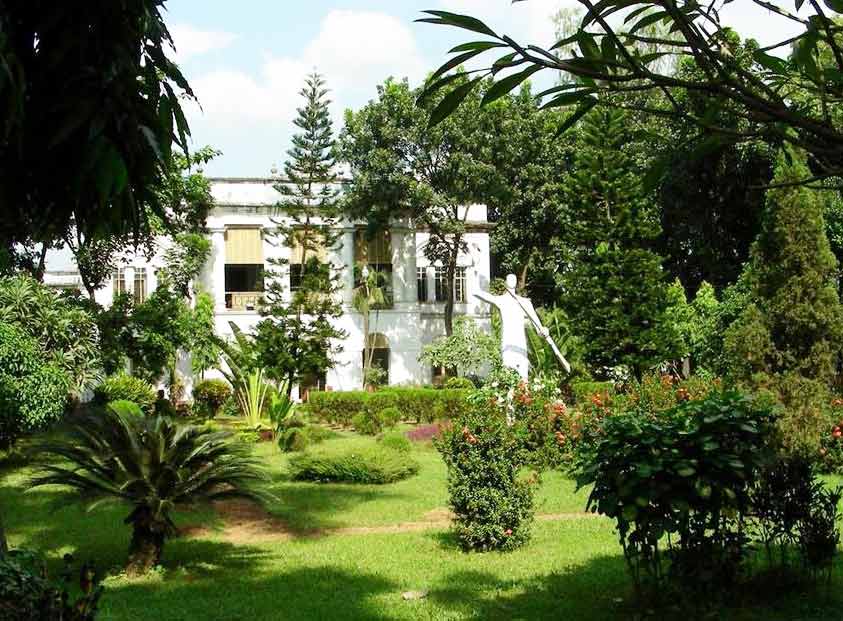
Gazipur
Overview and Geographic Significance
Situated just north of Dhaka, the capital of Bangladesh, Gazipur is a district rich in history and natural beauty. Historically known as “Joydebpur,” it was once part of the dense jungles of Vowal Pargana. Gazipur became a district in 1984, surrounded by Mymensingh and Kishoreganj to the north, Narsingdi to the east, Narayanganj and Dhaka to the south, and Tangail to the west. Covering 1,806.36 square kilometers, Gazipur includes 17.53 square kilometers of riverine area and 273.42 square kilometers of forest.
Climate and Natural Resources
With a tropical climate, Gazipur experiences temperatures ranging from 36°C to 12.7°C and an annual rainfall of 2,376 mm. These conditions contribute to its lush landscapes and fertile lands, making it ideal for agriculture and forestry.
Administrative and Urban Structure
Gazipur is administratively well-organized with one city corporation and four municipalities: Tongi, Sreepur, Kaliganj, and Kaliakair. It consists of five Upazilas: Gazipur Sadar, Kaliakair, Kaliganj, Kapasia, and Sreepur, further divided into 44 unions, 762 mauzas, and 1,114 villages.
The town of Gazipur covers 49.32 square kilometers and houses 123,531 residents, featuring 9 wards and 31 mahallas. It hosts significant establishments like the Bangladesh Rice Research Institute (BRRI) and the Dhaka University of Engineering and Technology.
Rivers and Waterways
Gazipur is traversed by important rivers such as the Old Brahmaputra, Shitalakshya, Turag, Bangshi, Balu, and Banar, essential for agriculture, transport, and local livelihoods.
Population and Literacy
Gazipur has a population of approximately 3,403,912, with a sex ratio of 109:100. The population density is 1,884 per square kilometer with an annual growth rate of 5.21%. The literacy rate stands at 62.60%, with higher literacy among males (66.00%) compared to females (58.90%). The district features numerous educational institutions, including five universities.
Economic Activities and Industrial Growth
Gazipur's economy is diverse, balancing agriculture and industry. Major crops include paddy, jute, mustard seed, and various spices, while the district's industrial sector features garment factories, textile mills, and pharmaceutical plants. Key exports are vegetables, fruits, medicines, cosmetics, and readymade garments.
Historical Sites and Cultural Heritage
Gazipur holds historical significance, especially related to Bangladesh’s War of Liberation. Important sites include mass killing fields and graves at Joydebpur Rajbari and Tongi Shaheed Smriti School. Memorials like ‘Jagrata Chaurangi’ honor the sacrifices made during the war.
Connectivity and Transportation
Gazipur is well-connected to Dhaka via the Dhaka-Tongi diversion road and the railway network, with stations at Rajendropur, Sreepur, Dhirasrom, Joydevpur, and Tongi.
Attractions and Points of Interest
Gazipur offers several attractions, such as Bhawal National Park, Pubail Resort, and the historic Bhawal Rajbari. Cultural and recreational sites, including Nuhash Palli and Kalinarayana Temple, enhance the district's appeal.
Conclusion
Gazipur, with its blend of historical significance, educational institutions, economic vitality, and natural beauty, stands out as a vibrant district in Bangladesh. Whether exploring its rich heritage, engaging in business opportunities, or enjoying its scenic spots, Gazipur offers something for everyone. As this district continues to develop, it remains a key area of interest in Bangladesh's dynamic landscape.
