
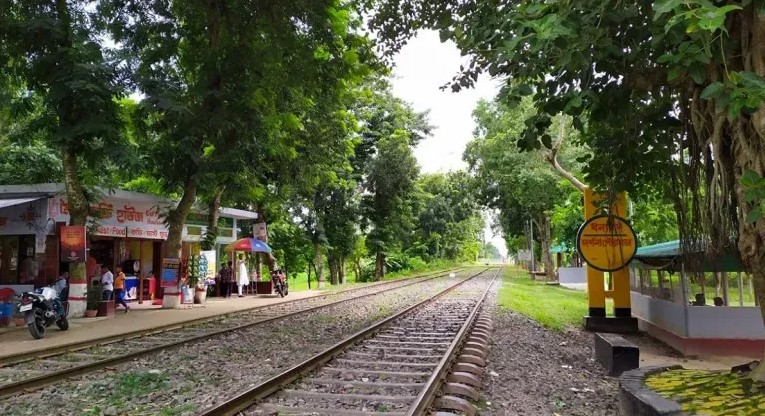
Chuadanga
Chuadanga is a district in the western part of Bangladesh, located in the Khulna Division. It is bordered by the Indian state of West Bengal to the west, Meherpur District to the northwest, Jessore District to the south, Jhenaidah District to the east, and Kushtia District to the north. Before the partition, Chuadanga was one of the five subdivisions under the Nadia District. It shares internal boundaries with Kushtia to the northeast, Meherpur to the northwest, and Jhenaidah to the south and southeast. The southwestern side is bordered by the Nadia District of India’s West Bengal. In January 2018, the district recorded the lowest temperature in Bangladesh.
Chuadanga is home to many historic and cultural sites, including the Darshana Distillery, Chuadanga Railway Station, and the Mathabhanga Bridge. The district also boasts several educational institutions, such as Chuadanga Government College, Chuadanga Medical College, and Chuadanga Engineering College. The economy is primarily agriculture-based, with rice, jute, and wheat being the main crops. It also hosts several industries, including Carew & Co. Sugar Mill and Chuadanga Jute Mill.
History of Chuadanga
The naming of Chuadanga has a long and complex history. It was originally part of the Nadia District of British India. In 1897, the area was named “Chungodanga” after a prominent Persian businessman, which likely evolved into the name “Chuadanga.”
In 1947, following the partition of India, Chuadanga became part of East Pakistan. During the Bangladesh Liberation War in 1971, Chuadanga was declared the first capital of Bangladesh. Over 100 battles between Pakistani forces and the freedom fighters took place here. After the war, Chuadanga was established as a separate district of Bangladesh.
Chuadanga District is divided into four upazilas: Chuadanga Sadar Upazila, Alamdanga Upazila, Damurhuda Upazila, Jibannagar Upazila. Each upazila consists of several unions, which are further divided into villages. Unions provide basic public services such as education, healthcare, and sanitation. Villages are the smallest administrative units in Bangladesh.
Tourist Attractions in Chuadanga
Here are some popular tourist attractions in the Chuadanga District of Bangladesh:
-
Alamdanga Railway Station: Built in 1859, this historic railway station is one of the oldest in Bangladesh. It’s a favorite spot for photographers and train enthusiasts.
-
Mass Grave of Freedom Fighters: This memorial is dedicated to the Bangladeshi freedom fighters who were martyred during the Liberation War of 1971. It’s located in Dhopakhali, Uttari, Jibannagar Upazila.
-
Gholdari Jame Mosque: Constructed in 1006 AD, this is one of the oldest mosques in Bangladesh. It is a revered site for Muslim pilgrims and tourists alike.
-
Gholdari Indigo Factory: Built in the 18th century, this is one of the oldest indigo factories in Bangladesh. It’s a popular destination for history and architecture lovers.
-
Chuadanga Boro Mosque (Three-Domed Mosque): Built in the 17th century, this iconic mosque is one of Chuadanga’s most renowned landmarks.
-
Karpasdanga Indigo Factory: Dating back to the 19th century, this is also among the oldest indigo factories in the country and attracts many history buffs and travelers.
-
Shrine of Khwaja Malik-ul-Ghaus: Dedicated to a Sufi saint who lived in the 18th century, this shrine draws Muslim pilgrims and curious visitors alike.
-
Goraitupi Amrabati Fair: Held annually in the village of Goraitupi, this fair is beloved by locals and tourists. It features traditional Bangladeshi food, music, and dance.
-
Chuadanga Government College: Established in 1886, this is one of the oldest educational institutions in Bangladesh and is cherished by students and alumni.
-
Police Park: Located in the heart of Chuadanga town, this park is popular among locals and tourists. It has various trees, flowers, and a playground.
-
Dua Lake: Situated on the outskirts of Chuadanga town, the lake is a popular spot for fishing, boating, and picnicking.
-
Talsari Road: Known for its scenic beauty, this road is a favorite route for bikers and nature lovers.
These are just a few of the many attractions in Chuadanga. With its rich history, culture, and natural beauty, Chuadanga is a wonderful place for a peaceful and enjoyable getaway.
Why Chuadanga is Famous
Here are some highlights that make Chuadanga well-known:
-
Chuadanga Boro Mosque: Built in the 17th century, this beautiful mosque is one of the district’s top attractions.
-
Dhopakhali Mosque: A small mosque built in the 18th century, located about 10 kilometers from Chuadanga town in the village of Dhopakhali.
-
Thakurpur Mosque: Actually a Hindu temple built in the 16th century, located in Thakurpur village about 15 kilometers from the town.
-
Sugarcane: Chuadanga is a major producer of sugarcane. The district has several sugar mills that process the locally grown cane into sugar.
-
Jute: The area is also a leading producer of jute, a natural fiber used in making bags, rugs, and garments.
-
Cotton: Chuadanga is a key cotton-producing district. Cotton grown here is used in clothing, bedding, and towels.
Besides its rich history and culture, Chuadanga offers stunning natural beauty. It is home to the Chuadanga River, Chuadanga Hills, and lush forests—making it a delightful destination for travelers.
