
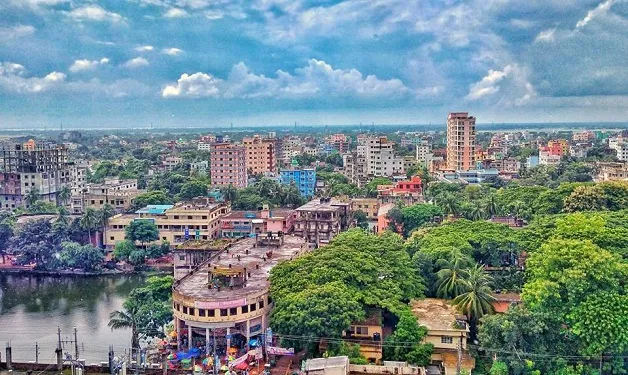
Brahmanbaria
Brahmanbaria, a vibrant district located in the east-central region of Bangladesh, forms an integral part of the Chittagong Division. This district, which spans an area of 1927.11 square kilometers, has a rich historical lineage that traces back to when it was known as Sarail Pargana and was part of Mymensingh district before 1830. Subsequently, it was under the administration of the greater Comilla District until it was delineated as a distinct district in 1984. Today, Brahmanbaria is subdivided into eight upazilas—Brahmanbaria Sadar, Ashuganj, Nasirnagar, Nabinagar, Sarail, Kasba, Akhaura, and Bancharampur—each with its unique contributions to the district’s culture and economy.
Geographically, Brahmanbaria is strategically located, bordered by Kishoreganj and Habiganj Districts to the north, Comilla District to the south, the Indian state of Tripura and Habiganj District to the east, and flanked by the Meghna River, along with Kishoreganj, Narsingdi, and Narayanganj Districts to the west. The district's population of approximately 2.36 million is almost evenly split between males and females, fostering a balanced demographic.
The economy of Brahmanbaria is predominantly based on agriculture, with nearly 45% of its population engaged in farming and related activities. The district is fertile and productive, growing an assortment of crops including rice, jute, wheat, mustard seed, and various vegetables like potato, onion, garlic, chili, pulses, brinjal, and kakrol. Beyond agriculture, Brahmanbaria has made significant strides in industrial development, particularly in energy production. The district hosts major natural gas fields like the Titas and Meghna Gas Fields, which not only meet local demands but also feed into the national grid, significantly bolstering the national economy.
Educationally, Brahmanbaria has a robust framework with several notable institutions. The district’s commitment to education is evident from its historical and prestigious establishments such as the Brahmanbaria Government College and Annada Government High School, which have been pivotal in enhancing the literacy and educational standards of the region.
Culturally, Brahmanbaria is often hailed as the cultural capital of Bangladesh, particularly in the domains of music and literature. The district has been the birthplace of legendary figures like Ustad Allauddin Khan, a monumental personality in classical Indian music, and literary giants such as Adyta Mallavarman, whose works continue to inspire and educate. Moreover, the district's cultural fabric is enriched with numerous historical sites, from centuries-old mosques and temples to modern structures like the Bangladesh UK Friendship Bridge.
Architecturally and historically, the district is adorned with landmarks such as the Arphail Sagardighi Mosque, the Bhadurghar Shahi Mosque, and various Hindu temples and Buddhist viharas, each telling tales of the region’s diverse religious and cultural heritage. Additionally, Brahmanbaria's natural landscape, characterized by its rivers like Meghna and Titas and scenic haors, adds to its aesthetic and ecological appeal.
In summary, Brahmanbaria is a district that embodies a harmonious blend of agriculture, industry, education, and culture. With its historical significance, economic contributions, and cultural richness, Brahmanbaria continues to play a crucial role in the socio-economic tapestry of Bangladesh.
