
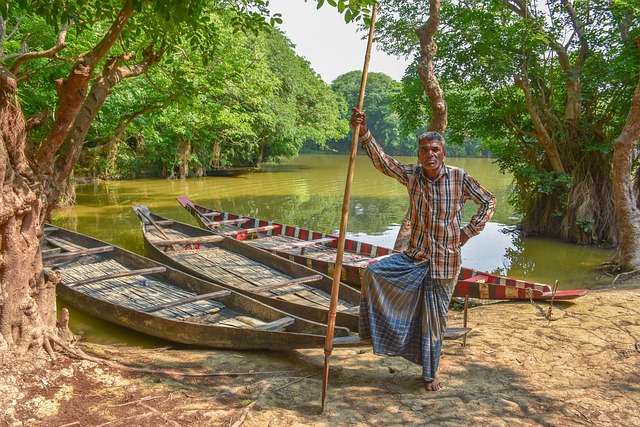
Bagerhat
Nestled in the southwestern corner of Bangladesh lies Bagerhat, a district rich in heritage, mystery, and natural beauty. Once known as Khalifatabad, this ancient coastal town bears a legacy that rivals the most historic settlements of the Indian subcontinent. Today, it proudly stands as part of the Khulna Division, with a history etched in both stone and spirit.
Bagerhat is home to two of Bangladesh’s three UNESCO World Heritage Sites—a rare distinction for any region. One is the magnificent Sixty Dome Mosque (Shat Gombuj Masjid) and the other is the awe-inspiring Sundarbans, the largest mangrove forest in the world. Though many recognize only the mosque as a UNESCO site, it is actually the entire medieval city of Khalifatabad, built by the revered Sufi saint Khan Jahan Ali, that received the honor in 1983. It's no surprise that Bagerhat is often referred to as “The City of Mosques”, a title that cements its place in the cultural and architectural heritage of the world.
The district’s name is forever tied to Hazrat Khan Jahan Ali (RA), a legendary figure who oversaw the development of this region in the 15th century. His contributions to Islamic architecture during the medieval period are still celebrated today. Remarkably, Forbes Magazine listed Bagerhat as one of the 15 Lost Cities of the World, a testament to its mysterious allure and historical depth.
Geographically, Bagerhat is located around 15 miles southeast of Khulna and 200 miles southwest of Dhaka. But beyond its coordinates lies a landscape steeped in natural wonder—especially with the Sundarbans occupying a significant portion of the district. Wildlife sanctuaries such as Karamjal, Dublar Char, and Kochikhali draw nature lovers and tourists from far and wide. The bustling Mongla seaport, the second largest in Bangladesh, further enhances the district’s importance on the national stage.
Historically, Bagerhat was once part of the vast Sundarbans forest and inhabited by indigenous, non-Aryan tribes such as the Austro-Asiatic, Dravidian, and Mongoloid Alpine people. Later, Aryan settlers arrived from Central Asia around 2,500 years ago, introducing Vedic beliefs and religious syncretism. The fusion of Aryan and non-Aryan traditions eventually gave rise to early Hindu practices in the region.
Archaeological findings support this vibrant mix of cultures. Ancient statues of Mahishasuramardini, Vishnu, and Buddha have been discovered in places like Panighata, Kharamkhali, and Jahajghata, pointing to strong Hindu and Buddhist influences. The region also holds relics from various dynasties, including coins and mosques from the Hussain Shahi period (1493–1538). Some historians believe Sultan Nasrat Shah even operated a mint near Mithapukur, close to Bagerhat town.
Under British colonial rule, Bagerhat underwent administrative evolution. Initially a part of Jessore district, it later became a sub-district under Khulna. The name Mongla itself comes from two Englishmen with the surname "Morel," who established the Mongla Port in 1849. After a violent Indigo Revolt in 1861, led partly by the resistance of locals like Rahimullah, literary giant Bankim Chandra Chattopadhyay, then a deputy magistrate, proposed establishing Bagerhat as a sub-division, which became official in 1863. Eventually, in 1984, Bagerhat was elevated to a full district.
Quick Facts about Bagerhat:
-
Area: 3,959.11 square kilometers
-
Coordinates: Between 22°32′–22°56′ N latitude and 89°32′–89°48′ E longitude
-
Municipalities: 3 (Bagerhat, Mongla, Morrelganj)
-
Unions: 75
-
Villages: 1,047
-
Rivers: 32
-
Upazilas: 9 (Bagerhat Sadar, Mongla, Morrelganj, Chitalmari, Kachua, Rampal, Fakirhat, Mollahat, Sharankhola)
Top Attractions in Bagerhat:
-
Sixty Dome Mosque (Shat Gombuj)
-
Khan Jahan’s Dighi (Tank)
-
The Sundarbans, including Karamjal and Dublar Char
-
Ayodhya/Kodla Math Monastery
-
Khan Jahan’s Ancient Roads & Bridges
-
Reza Khoda Mosque
-
Zinda Pir and Thanda Pir Mosques
-
Singair, Bibibeguni, Chunakhola, Nine Dome, and Ten Dome Mosques
-
Mongla Seaport
Final Thoughts:
With its seamless blend of natural beauty, deep spirituality, and historical richness, Bagerhat is more than just a district—it’s a living museum of Bangladesh’s cultural evolution. Whether you’re a history buff, a nature enthusiast, or simply someone looking to explore the roots of Bengali heritage, Bagerhat promises a journey worth remembering.
